Installing a New Bathroom in the UK
Installing a new bathroom in the UK is a significant home improvement project that includes the initial design choices, plumbing and electrical work and room modifications. Costs vary widely depending on the size of the room, the quality of materials, and how complex the installation is.
A new bathroom is a valuable upgrade you can make to your home. As well as improving day-to-day comfort, it can also increase property value and appeal to buyers. However, understanding the bathroom installation process and budgeting correctly is important before starting.
In 2026, the average cost of installing a new bathroom in the UK ranges from around £4,500 to £11,000, with some projects as low as £2,000 and luxury renovations exceeding £20,000.
The Bathroom Installation Process
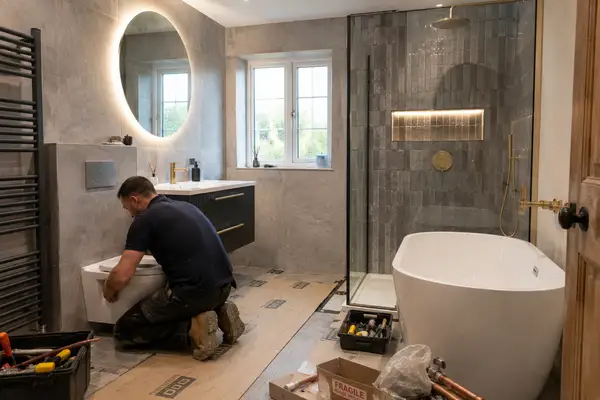
Installing a bathroom typically takes between 5–10 working days depending on complexity.
1. Planning and Design
This stage includes layout decisions, choosing the right fixtures and making sure you don’t go over budget. Consideration should include keeping the same toilet, bath and sink layout which can reduce costs.
There are a lot of regional and national bathroom suppliers and designers. Choosing the right one will depend on their range and your budget.
If you are on a strict budget or a landlord looking for a quick turn around, Wickes or Victoria Plumbing might suit you. If you want a mid-range quality upgrade then you can check out Roper Rhodes, Hudson Reed or one of the many independent local suppliers on the High Street.
Most High Street sellers offer a design service. Some offer to be project managers supplying their own tradepeople. You might be able to get it installed cheaper elsewhere so make sure you know the cost.
|
Tier |
Typical Cost (Suite) |
Brands |
Quality |
|
Cheapest |
£300–£550 |
Victoria Plumbing, Nuie |
Basic |
|
Best Value |
£550–£1,100 |
Wickes, B&Q |
Good |
|
Mid-Range |
£900–£2,000+ |
Hudson Reed, Roper Rhodes |
Very good |
2. Removal of Existing Bathroom
Old baths, sinks, toilets and shower fittings are removed and disposed of. This includes removing tiles and cabinets or shelves if you are doing a total bathroom upgrade.
- Typical cost: £0*–£900
*If you are feeling brave you might want to do this yourself to save some money but make sure the hired plumber has checked your intentions beforehand. You don’t need a qualification to remove an old bathroom suite but you do need to know what not to remove.
3. First Fix (Plumbing & Electrics)
Pipework, drainage, and wiring are installed or modified. Moving these can increase costs but if it is essential for the design, don’t make compromises—Unless it’s the toilet, don’t move that too far if you can help it.
4. Installation of Fixtures
Baths, showers, toilets, and basins are fitted. Timing is important and the fittings need to be in your home before the plumber or installer starts the bathroom installation.
5. Tiling, Flooring & Finishing
Walls and floors are tiled or panelled, followed by painting and finishing touches. Most plumbers will be able to tile but sometimes it is better to employ a dedicated tiler to get a better finish.
Cost Breakdown for a New Bathroom Installation
Here’s an approximate breakdown of where your bathroom budget gets spent:
1. Labour Costs
Labour is typically the largest expense, accounting for 45–60% of total cost.
- Bathroom fitter: £1,500–£3,000
- Plumber: £600–£1,500
- Electrician: £200–£600
- Tiler: £500–£1,500
Daily rates:
- £200–£400 per day
2. Materials and Fixtures
Typical material costs range from £2,000–£6,000.
Approximate prices:
- Toilet: £175–£350
- Basin: £100–£275
- Bath: £250–£400
- Shower: £250–£750
3. Installation Elements
|
Element |
Typical Cost |
|
Suite installation |
£600–£1,500 |
|
Plumbing |
£800–£1,200 |
|
Electrics |
£500–£800 |
|
Tiling |
£800–£1,500 |
|
Flooring |
£400–£600 |
|
Decorating |
£300–£600 |
4. Additional Costs
- Moving pipework: £500–£1,500
- Tiling labour: £200–£350/day
- Waste removal/skips: £200–£400
- Unexpected repairs (e.g. damp, wiring): variable
Cost Tiers: Cheapest to Most Expensive
1. Cheapest: DIY or Basic Refresh (£2,000–£4,500)
This is the lowest-cost option and usually involves:
- Replacing fixtures only (no layout changes)
- Budget materials (basic ceramic tiles, acrylic bath)
- Some DIY work
Typical features:
- Close-coupled toilet
- Pedestal basin
- Basic lighting
Best for:
- Small bathrooms or en-suites
- Landlords or budget-conscious homeowners
2. Budget Professional Installation (£4,500–£6,000)
This includes:
- Professional fitting
- Basic tiling
- Minimal plumbing changes
You’ll get:
- Reliable installation
- Mid-quality fixtures
- Improved aesthetics
3. Standard Mid-Range Bathroom (£6,000–£9,000)
This is the most common UK option.
Includes:
- Full professional installation
- Mid-range fixtures
- Partial layout changes
Typical features:
- Vanity unit basin
- Thermostatic shower
- Porcelain tiles
This aligns with the UK average spend of around £6,500–£7,000.
4. High-End Bathroom (£10,000–£20,000+)
This level includes:
- Designer fixtures
- Layout redesign
- High-end materials
Features:
- Walk-in showers
- Freestanding baths
- Underfloor heating
5. Luxury/Bespoke Bathrooms (£20,000+)
At the top end:
- Custom-built furniture
- Premium stone or marble
- Smart technology (digital showers, lighting systems)
Large bathroom projects can reach £18,000–£30,000+.
Key Factors That Affect Cost
1. Bathroom Size
Costs scale with size, but even small bathrooms can be expensive due to fixed plumbing costs.
2. Layout Changes
Moving a toilet or shower can add hundreds or thousands of pounds.
3. Materials
Tiles, fixtures, and finishes can dramatically increase costs.
4. Location
London and the South East typically cost 10–40% more due to labour and demand.
5. Complexity
Wet rooms, underfloor heating, and bespoke designs all increase labour time and cost.
Ways to Save Money
- Keep the existing layout
- Choose mid-range rather than designer fixtures
- Do simple tasks yourself (e.g. removing old tiles)
- Use wall panels instead of tiling
- Get multiple quotes
However, cutting corners on plumbing or waterproofing can lead to expensive problems later.
Still Want a New Bathroom?
Installing a new bathroom can cost anywhere from £2,000 for a basic DIY refresh to over £20,000 for a luxury installation, with most homeowners spending between £5,500 and £8,000.
The cheapest installations involve minimal changes and budget materials, while the most expensive projects include full redesigns, premium finishes, and bespoke features. Labour remains the biggest cost driver, often making up more than half of the total spend.
Ultimately, the key to a successful bathroom installation is balancing budget, quality, and long-term durability. Spending wisely—especially on skilled trades and waterproofing—ensures your new bathroom not only looks great but lasts for years to come.
Enter your postcode a get in touch with Bathroom fitters local to you.
 ?>
?>
